
Whirlpool Washer Stops Mid-Cycle? Try These Fixes
Does your Whirlpool washer start normally but stop before the cycle is finished? Don't panic. This can happen because of a power problem, an uneven load, slow filling, or trouble draining.
Check when the washer stops. Does it stop while filling, washing, rinsing, or spinning? This will help you find the cause.
How to Fix a Whirlpool Washer That Stops Mid-Cycle
First, cancel the cycle, disconnect the washer from power for five minutes, then reconnect it and try a smaller, balanced load. If it stops again, check the water supply, drain hose, door or lid latch, and any error code on the display.
If your washer is still under warranty, contact Whirlpool before removing any panel. Opening the washer may affect the warranty. Also, leave electrical testing to a qualified appliance technician.
Check Where the Washer Stops
Watch the washer during a short cycle and check what it was doing just before it stopped. Also write down any error code or flashing lights on the panel.
- If it stops while filling, check the water supply first
- If water remains in the drum, check the drain hose
- If it stops before spinning, balance the load and check the door or lid
- If the whole panel goes dark, check the power supply
Error codes can mean different things on different models. Write down the code because it can help a technician find the problem.
Reset the Washer
A small control problem may stop the cycle even when nothing is broken. Resetting the washer can clear this problem, but it will not fix a damaged part.
Here is how to reset the washer:
- Cancel the cycle if the buttons are working
- Unplug the washer or switch off its breaker
- Wait five minutes
- Turn the power back on and select a short cycle
- Run the cycle with a small, balanced load
Do not keep resetting a washer that trips its breaker, smells burnt, sparks, or makes the outlet hot. Leave it disconnected and ask a qualified technician or electrician to inspect it.
Balance the Load
A large item or tightly packed drum can become unbalanced before the spin cycle. The washer may stop while it tries to move the clothes around.
Remove a few item, separate anything twisted together, and spread the remaining laundry evenly. If you are washing one heavy item, add similar items only when the care labels and washer capacity allow it.
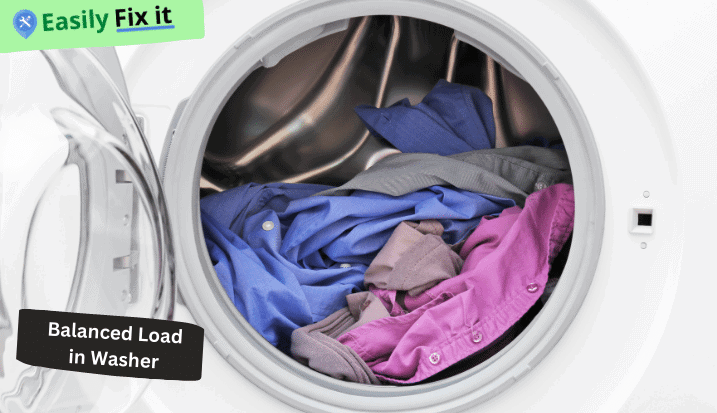
Also check that the washer stands firmly without rocking. Adjusting the feet or floor is safer than trying to hold the machine still while it runs.
Check the Water Supply
A washer may stop when water enters too slowly. Open both supply faucets fully, straighten the inlet hoses, and check that water is running elsewhere in the home.
If the drum is not filling or the water enters very slowly, read our guide about a Whirlpool washer that is not filling with water. Turn off the faucets before loosening an inlet hose.
Inspect the Drain Hose
If the washer stops with water still inside, it may be waiting for the tub to drain. Look behind the machine for a crushed, sharply bent, or blocked drain hose.
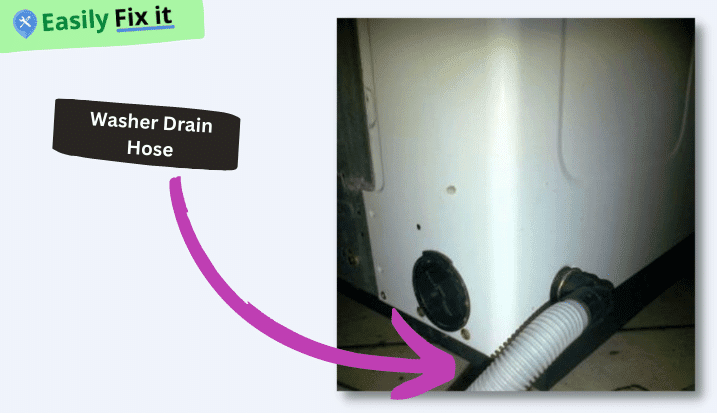
Disconnect power before reaching behind the washer, and turn off the water if you need to move it. Make sure the hose have not been pushed so far into the standpipe that the opening is sealed.
If the tub will not empty, read our guide about a Whirlpool washer that is not draining.
Make Sure the Door or Lid Stays Closed
Your washer will stop if the door or lid opens during the cycle. Remove clothing around the opening, clean detergent from the latch, then close it gently.
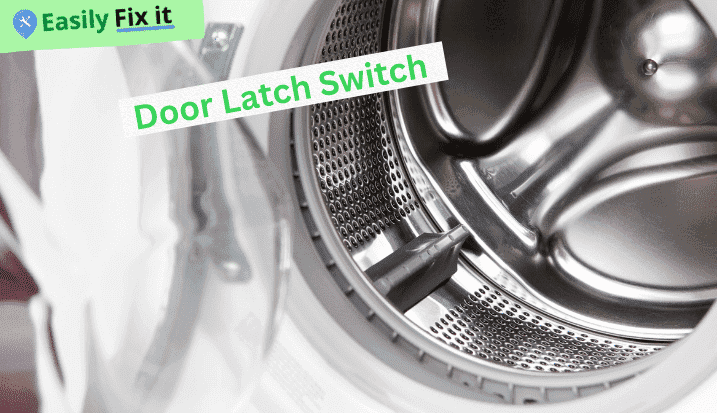
A loose lid, damaged latch, or door that does not close properly can stop the washer. Do not bypass the lock or switch. If the latch is cracked or keeps unlocking mid-cycle, ask a technician to check it.
Use the Correct Detergent Amount
Too much detergent can make excessive suds, especially in a high-efficiency washer. The machine may add time, pause, or struggle to drain while it tries to deal with the foam.
Use the detergent type required by your washer and measure it for the load size, water hardness, and product directions. If the drum is full of suds, cancel the cycle and follow the washer's instructions for removing them.
Check for a Power Interruption
Make sure the plug fits securely and the washer is not connected through an extension cord. Check whether nearby clocks or appliances also lost power when the washer stopped.
If the breaker has tripped, leave the washer off. Repeated breaker trips can point to an electrical fault, so a qualified electrician or appliance technician should find the cause before the washer is used again.
When to Call for Service
A washer that always stops at the same point may have a faulty latch, pump, motor part, sensor, timer, or control board. The parts are different for each model, so don't order one just because of this problem.
Tell Whirlpool or a qualified technician the model number, error code, selected cycle, and where the washer stops. This can help them find the fault without replacing good parts.
Conclusion
In most cases, you can find the cause by checking where the washer stops. Start with a reset and balanced load. Then check the water, drain hose, door or lid, detergent, and power.
- Reset the washer once
- Balance the laundry and make sure the washer is stable
- Check the water supply
- Check the drain hose
- Make sure the door or lid stays closed
- Use the correct amount of detergent
- Check for a power problem
Whirlpool Washing Machine Still Not Working?
Start with what your washing machine is doing. Use our diagnostic tool, answer a few easy questions, and get the solution.
Use Our Whirlpool Washing Machine Troubleshooting ToolWas this page helpful?
Thanks for your feedback!
Written by
Muhammad Ali is an Electrical Engineer and Appliance Repair Specialist from Canada, who has been helping people fix their appliances since 2020.